Children are fascinated by the solar system, so it’s no wonder that they enjoy classical music with a space theme! “The Planets” by Gustav Holst is a great example of such a piece and it also represents an important era in classical music history when composers were writing symphonies based on nature and science.

What are some of the most interesting aspects of “The Planets?“
There are many interesting aspects of “The Planets” by Gustav Holst. One aspect is the use of the orchestra to create a celestial atmosphere, which makes listeners feel as if they are looking up at the stars.
Another interesting part is how he uses different instruments to represent each planet and its associated characteristics. For example, there is a string section representing Jupiter’s heavyweight and thunderous nature, while intense instrumentation represents Mars’ rediscovered warlike tendencies.
Three Student Benefits of “The Planets”
Explores planetary concepts. The music of “The Planets” is inspired by the different planets of our solar system. Each movement is named after a planet, and the music is said to represent the characteristics of that planet. This can be a fun and informative way for students to learn more about space!
Develops music appreciation. “The Planets” is a complex and beautiful piece of music. It can help students develop their understanding of different musical elements, such as melody, harmony, and rhythm. It can also help them appreciate the power of music to evoke emotions and tell stories.
Enhances creativity. The music of “The Planets” is open to interpretation. Students can use their imaginations to create their own stories and images inspired by the music. This can be a great way for students to express their creativity and explore their own ideas.
Overall, introducing Gustav Holst’s “The Planets” to students can be a valuable and enriching experience. It can help them learn about the planets, develop their musical appreciation, and explore their own creativity.
Learning Objectives
Through listening to Holst’s music, students can explore the solar system. The music lovingly captures the beauty and power of the planets and helps students to understand the different aspects of the solar system. Each musical composition represents a different planet.
🚀 increased knowledge of planets, their characteristics, and the solar system
🚀 familiarity with the composer’s works
🚀 ability to recognize, and engage with, popular pieces of classical music
🚀 identify different instrument sounds
🚀 social-emotional exploration of feelings and moods within classical music
🚀 creative expression by drawing and choosing colors related to a musical theme

“The Planets” activity pack has several styles and levels of listening sheets. Students listen to each movement and draw, identify keywords and instruments, and more! There is plenty of space for creativity and personalization on these pages. Each student will identify with the music in their own way – there are no wrong answers!
Teacher Testimonial
“This resource contains such a wide variety of listening reflection sheets!! My students loved using them as they listened, compared, and contrasted the various sections of Vivaldi’s Four Seasons!”
Michelle B.

The Planets by Gustav Holst
This packet contains a set of listening activities to introduce children to the orchestration and harmony of Gustav Holst’s “The Planets!”

Halloween Spooky Planets by Gustav Holst
Classical Halloween Story listening sheets combine music appreciation with a spooky theme! Students compose their haunted tale by choosing the setting, characters, and familiar Halloween objects inspired by the music.
Listening Guide for “The Planets”
Gustav Holst’s “The Planets” is a seven-movement orchestral suite that depicts the planets of our solar system. This listening guide will provide you with an overview of each movement, as well as some insights into the music’s symbolism and meaning.
Mars, the Bringer of War
“Mars” is characterized by its driving rhythms, brass fanfare, and dissonant harmonies. The music is said to represent the destructive power of war.
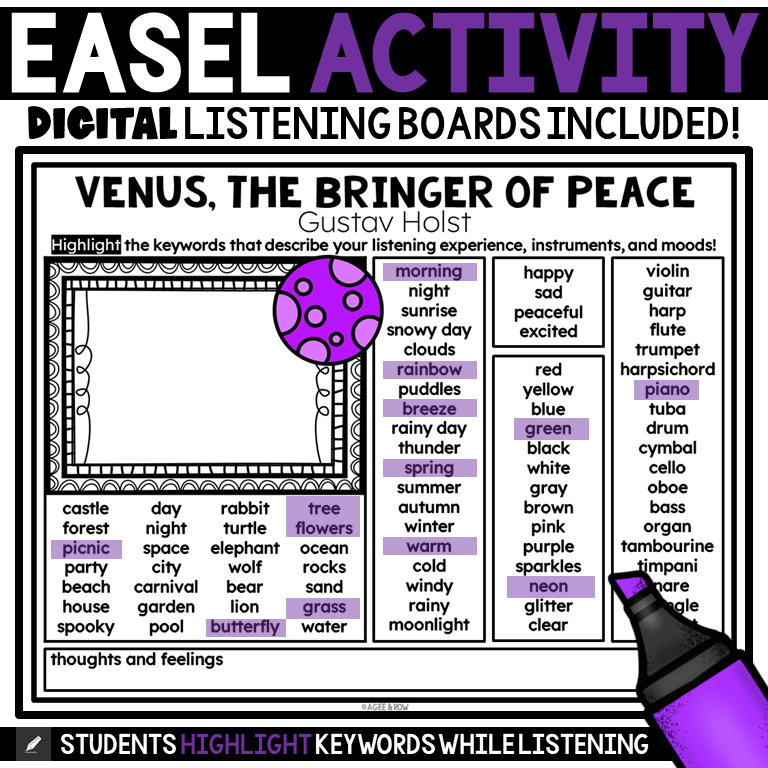
Venus, the Bringer of Peace
“Venus” is characterized by its gentle melodies, flowing harmonies, and delicate orchestration. This movement represents the peaceful beauty of Venus.
Mercury, the Winged Messenger
“Mercury” is characterized by its quick tempo, darting melodies, and light orchestration. The music is said to represent the swiftness and agility of Mercury.
Jupiter, the Bringer of Jollity
“Jupiter” is characterized by its triumphant melodies, powerful rhythms, and brilliant orchestration. The music is said to represent the majesty and joy of Jupiter.
Saturn, the Bringer of Old Age
“Saturn” is characterized by its slow tempo, somber melodies, and heavy orchestration. The music is said to represent the slow, inevitable passage of time.
Uranus, the Magician
“Uranus” is characterized by its mysterious harmonies, angular melodies, and ethereal orchestration. The music is said to represent the strange and otherworldly power of Uranus.
Neptune, the Mystic
“Neptune” is characterized by its slow tempo, drifting melodies, and delicate orchestration. The music is said to represent the vast, silent mystery of Neptune.
What is the Easel Activity?
Within Easel, students use the highlight tool to choose from keyword lists that describe their listening experience. An answer box allows students to type a brief description of their thoughts and feelings. Using the pen or any design tool provided, students can decorate a scene or upload an image to the frame!


 Agee & Row