
Easter is a time for celebration and reflection, and sacred classical music can be a powerful way to explore the meaning of this important holiday. Sacred classical music is written for religious purposes, and it can be found in many different cultures and traditions.
The origins of sacred classical music can be traced back to the early days of Christianity, when music was used to praise God and to tell the stories of the Bible. Over the centuries, sacred classical music has evolved and developed, and it now includes a wide variety of genres, from choral pieces to orchestral works.
There are many benefits to adding sacred classical music to homeschoolers’ Easter studies. First, it can help them to learn about the history and traditions of Christianity. Second, it can help them to develop their appreciation for beauty and spirituality. Third, it can help them to connect with their own faith and to express their feelings about Easter.
Three Iconic Pieces of Sacred Classical Music
Haydn’s The Seven Last Words of Christ on the Cross is a somber and reflective piece of music that meditates on the suffering of Jesus Christ.
George Frideric Handel’s Messiah is another great choice for Easter studies. This oratorio tells the story of the Messiah, from his birth to his resurrection.
Johann Sebastian Bach’s St. Matthew Passion is a masterpiece of sacred music that tells the story of the crucifixion and resurrection of Jesus Christ.
These are just a few of the many great pieces of sacred classical music that can be enjoyed during Easter studies. By listening to this music, homeschoolers can learn about the history and traditions of Christianity, develop their appreciation for beauty and spirituality, and connect with their own faith.
Easy Ways to Introduce Sacred Classical Music
Here are some ideas for how homeschoolers can incorporate sacred classical music into their Easter studies:
✝️ Listen to sacred classical music while reading the Bible or other religious texts.
✝️ Watch a performance of a sacred classical music piece.
✝️ Sing sacred classical music in a choir or with a family or friends.
✝️ Play sacred classical music on an instrument.
✝️ Write about the meaning of a sacred classical music piece.
✝️ Create a visual representation of a sacred classical music piece.
No matter how you choose to incorporate sacred classical music into your Easter studies, homeschoolers can benefit from the beauty, spirituality, and educational value of this music.
Free Sacred Classical Music Listening Activities
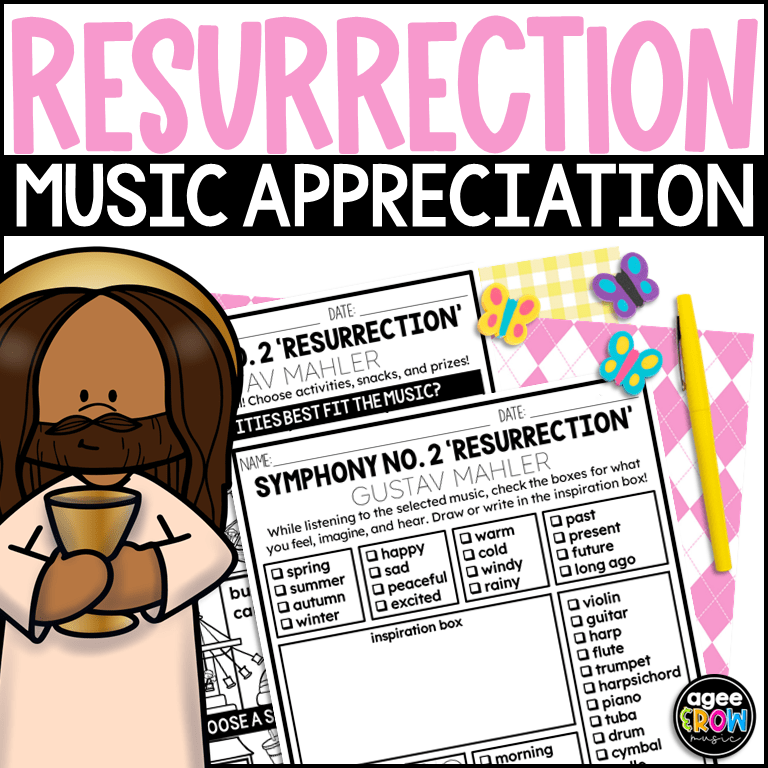
Experience classical music’s beauty and complexity while including scripture in an engaging, creative way. These Easter-inspired activities promote social-emotional learning and nurture an appreciation of sacred music and texts.
Just print and cue the music! Students begin listening and interpreting what they hear and feel. The music is available on YouTube or your favorite streaming services. There are no wrong answers, and no musical training is required. There are five differentiated listening sheets included.
 Agee & Row
Leave a comment