
Need an easy tool to help with children’s financial literacy?
It’s never too early to start teaching your kids about money. A cash envelope system is a great way to teach them the value of money and how to budget. It also helps them to understand that there are different ways to save and spend money.
Do you want to give your students or children a better understanding of saving and spending? This simple cash envelope system is a hands-on is a fantastic way to introduce kids to financial responsibility. Keep reading to learn how to set up a cash envelope system that’s both fun and educational for your child!
We’ll be introducing you to a super easy Cash Envelope System for Kids to help you get started.
4 Easy Ways to Start Teaching About Budgets
💰 Explain to your children how money works and where it comes from. This will help them understand that money doesn’t grow on trees and that it needs to be earned.
💰 Teach about saving and encourage them to put some of their money into savings. This will help them develop a habit of setting aside money for future goals.
💰 Help plan and prioritize spending decisions. Teach your kids how to compare prices and make wise spending decisions. This will help them avoid impulse purchases and stay on budget.
💰 Encourage philanthropy. Demonstrate the importance of giving back by donating to charities and volunteering time. This will nurture a sense of compassion and help them see the value of helping others.
How to Help Your Kids Create a Budget
One of the most important things you can do for your kids is to help them learn how to budget. A budget can help your kids learn how to save money and make informed choices about spending.
💰 Talk to your kids about money. Explain what a budget is and why it’s important. Help them understand that a budget is a way to make sure they have enough money to cover their expenses and still have some for savings.
💰 An allowance can be a great way to teach kids about budgeting. They will need to figure out how much they need to spend on essentials and how much they can save or spend on wants like toys and video games.
💰 Help them set goals. Kids are more likely to stick to a budget if they have specific goals in mind. Sit down with them and help them set realistic savings goals for short-term and long-term purchases.
💰 Show them how to track their progress. There are a number of ways you can help your kids track their progress toward their savings goals.
💰 Encourage children when they make good choices. When they save up their allowance or resist the urge to spend impulsively, praise their efforts! This will help them see the value in sticking to a budget.

Need an Easy Cash Envelope System?
One great way to teach kids about budgeting is to use cash envelopes. You can label each envelope with a different category, like allowance, entertainment, and savings.
Then, when it’s time to spend money, they can physically hand over the cash. This system can help kids understand where their money goes and how to stick to a budget.
There are four categories – save, spend, gifts, and donate. After printing and assembling the envelopes, let the budgeting fun begin! We love Astrobrights® paper, but white or any other color/design works, too!
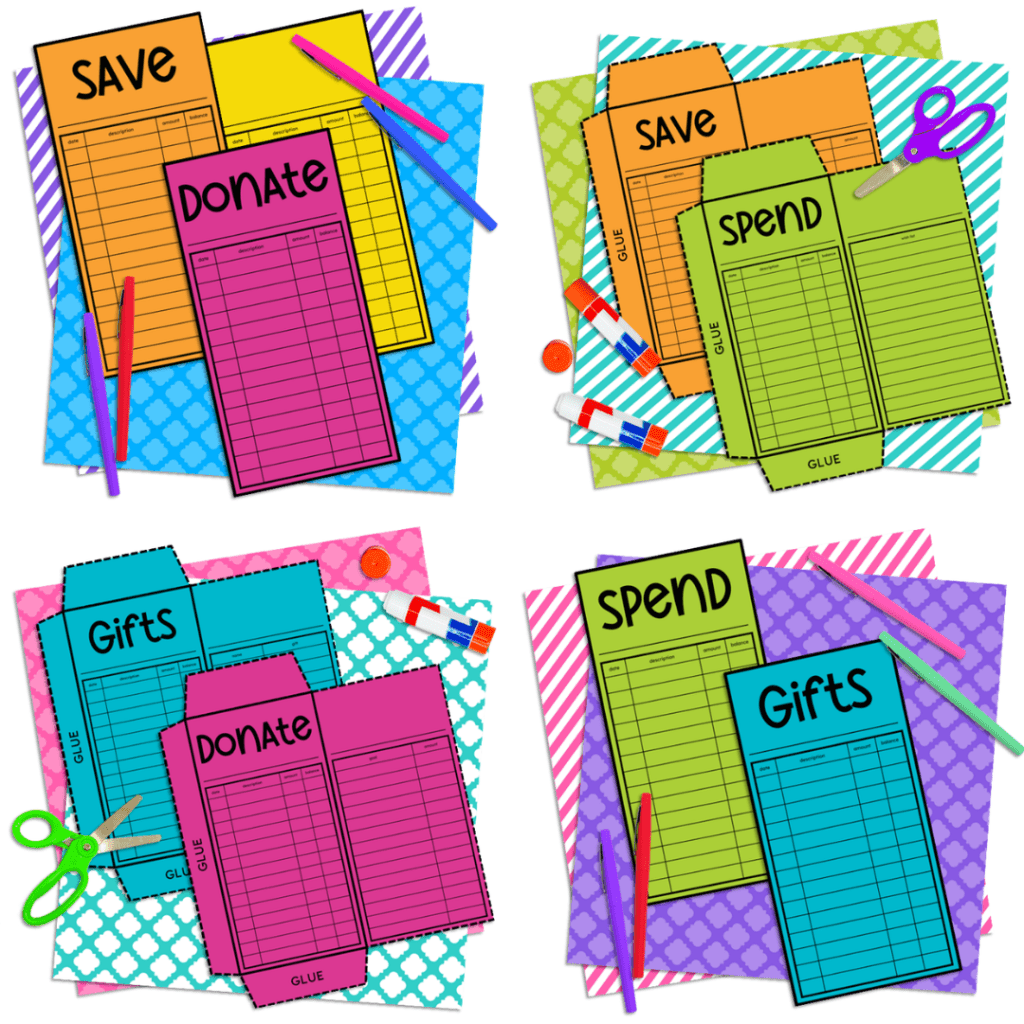
Save
One of the best ways to teach kids about budgeting is to have them save up for something they really want. This could be a toy, a new game, or even a trip somewhere fun! Savings goals could include short and long-term aspirations.
There are a lot of benefits that kids can gain by learning about saving money through a cash envelope system. It can teach them the value of money and how to be responsible for it.
Additionally, it can help them develop good financial habits that will last into adulthood. Saving can give children a sense of accomplishment as they watch their savings grow.
In our society, we are often inundated with instant gratification – we want what we want and we want it now. However, this isn’t always possible or wise when it comes to money.
Learning to save up for something big that they really want demonstrates the importance of patience and planning. And these are skills that they will definitely need as they grow older!
Spend
Talk to your kids about why it’s important to spend wisely. Explain that spending too much money can lead to debt and that it’s important to think about whether something is worth the price before buying it.
Help them set up a budget. Sit down with them and explain how much money they have to spend each week or month, and help them figure out what they need to spend it on.
Show them how to find the best deals on items they want to buy, and explain why it’s important to compare prices before making a purchase. Include further discussions on sales and coupon strategies.


Donate and Gifts
One of the best ways to teach kids about money is to have them donate some of their own money. This will help them understand that there are people in the world who are less fortunate and that it’s good to help others.
Begin with setting aside a certain amount of money each week to donate. They can place this money into the envelope labeled “Donate”. Encourage your child to drop some of the money in a donation jar or box, or interact with local fundraisers in the community.
Do your children enjoy choosing and presenting loved ones with gifts? The ‘gifts’ cash envelope is a great practice in gift planning for birthdays and holidays (or just because!) There is plenty of space on the back to write down gift ideas and recipients.
This is a great way to introduce saving for a particular date or occasion.


 Agee & Row